
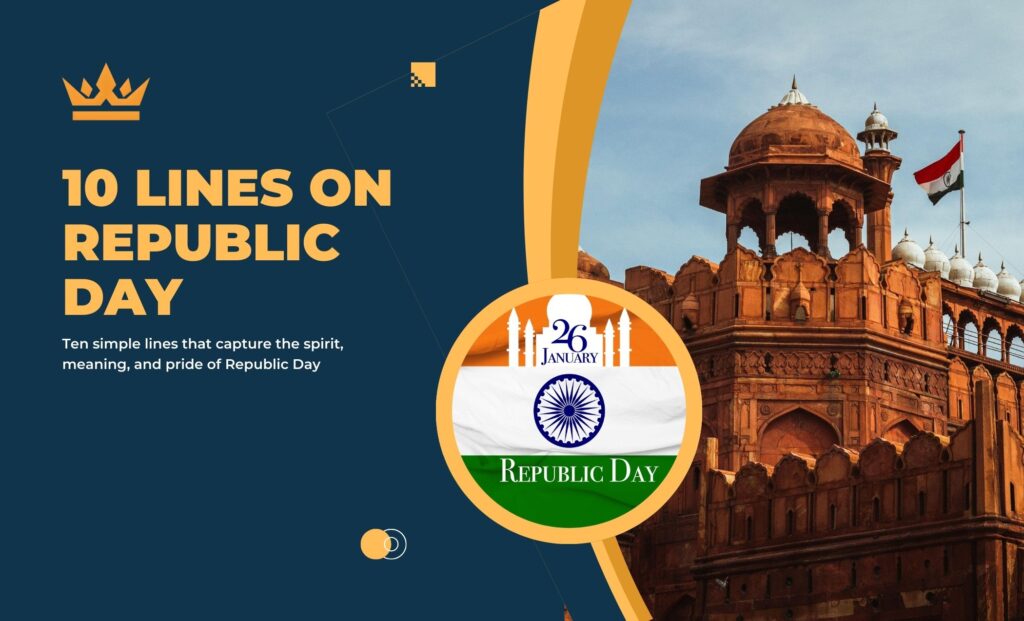
Republic Day often looks simple at first. A flag rises slowly into the morning sky. A parade moves along a wide road. A familiar song plays and people stand still for a moment. If you sit with the day for a little longer, you begin to feel the layers underneath. There is history resting quietly behind the ceremony.
There is hope built into every promise. There is disagreement, debate, and sacrifice hidden behind each rule written on paper. And there is the steady effort of ordinary people trying to live better lives within a shared system.
This day is not only about a moment frozen in time or a fixed date on the calendar. It is about a decision a young nation made for itself. It is about choosing laws over individuals and responsibility over impulse. Republic Day reminds us that freedom did not end with independence. Freedom continued through patience, duty, compromise, and shared values that must be practiced every day.
This piece is a friendly and straightforward walk through what Republic Day means, why it matters, and how it exists in everyday actions as much as in grand ceremonies. The tone stays human and calm, like a conversation that unfolds naturally, not a lesson delivered from a stage.
10 Lines on Republic Day
- Republic Day is celebrated in India on January 26 every year.
- It marks the day when the Constitution of India came into force in 1950.
- On this day, India officially became a republic governed by its own laws.
- Republic Day reminds us of freedom, equality, and justice.
- A grand parade is held at Kartavya Path in New Delhi.
- The President of India hoists the national flag and reviews the parade.
- Soldiers, students, and artists take part in the celebrations.
- Brave citizens and soldiers receive national awards and honors.
- Republic Day teaches us to respect our Constitution and our duties.
- It fills many Indians with pride and a sense of belonging.
For some it is a quiet comfort. For others it is a lively celebration. For many it is both at once.
The short story: what happened on January 26
On January 26, 1950, the Constitution of India came into force. With this step, India officially became a republic. The country would be guided by laws created by representatives chosen by the people. Power would no longer rest with rulers chosen by birth or with authority imposed from outside.
This moment was not sudden. It came after years of discussion and effort. Delegates traveled many miles to attend meetings. They spent long days and late nights arguing over words that would shape the future. Members of the Constituent Assembly debated nearly every idea. They disagreed openly and argued strongly, yet they returned to the table again and again. Their goal was not perfection. Their goal was fairness and balance in a country with deep differences.
The date itself carried meaning. On January 26, 1930, Indian leaders had declared Purna Swaraj, which meant complete independence from British rule. Choosing the same date twenty years later connected the struggle for freedom with the responsibility of self rule. It created a bridge between resistance and governance, between dreams and discipline.
Why the word republic matters in simple words
A republic is not a complex idea. It simply means that no person is above the law. There is no king by birth and no permanent ruler. Leaders are chosen by the people and can be replaced by the people. The law stands above everyone.
In a republic, every individual has value. The idea is straightforward. A person should be treated fairly because they are a person, not because of status or wealth. Background, language, religion, or income do not decide a person’s worth. The law exists to protect dignity and fairness. When disputes arise, courts decide based on rules, not influence.
Being a republic also means accountability. Leaders must explain their decisions. Laws can be questioned. Mistakes can be challenged. These checks do not weaken the system. They strengthen it. Republic Day reminds us that freedom lasts only when rules are respected.
A little history without the dust
India gained independence on August 15, 1947. That day brought celebration and relief. It also brought confusion. A free nation needed structure. Without clear rules, freedom could quickly become fragile.
The Constituent Assembly was tasked with writing a Constitution. Its members came from different regions, communities, and political backgrounds. They studied constitutions from other countries but focused on Indian realities. The Assembly met for almost three years. They read, revised, argued, and rethought almost everything.
Dr. B. R. Ambedkar served as Chairman of the Drafting Committee. His understanding of law and his commitment to social justice shaped the document deeply. When the Constitution was ready, it was adopted and implemented on January 26, 1950. From that moment, India became a republic in both name and practice.
What the Constitution does in plain language
The Constitution is the country’s rulebook. It is long and detailed, and on first reading it can seem overwhelming. At its heart are clear ideas about fairness and how people live together. The Constitution explains how the government works and how power is shared. It divides responsibility among the Legislature, Executive, and Judiciary so that no single group controls everything.
The Constitution also protects citizens through Fundamental Rights. These include equality before the law, freedom of speech, and freedom of religion. These rights are not favors given by the government. They are guarantees.
The Constitution also lists Fundamental Duties. These remind citizens to respect national symbols, protect public property, and care for the environment. The document is detailed because India is complex. It tries to give structure to diversity without silencing it.
The parade and the pageantry: what we see in Delhi
The Republic Day parade in New Delhi is the most visible part of the celebration. The President hoists the national flag and reviews the parade at Kartavya Path. Soldiers march in precise formation. Military bands play with careful timing.
The armed forces display equipment and aircraft fly overhead. Alongside this strength, colorful tableaus from different states move slowly down the road. These displays show art, culture, history, and social themes.
Children perform dances and songs. Every step is planned carefully. Millions watch across the country. For many viewers the best moments are small: a child waving a tiny flag, an old soldier smiling, or a tableau that brings a forgotten story to life. The parade is not only about power. It is about identity, memory, and unity.
The quiet parts: how communities and schools keep the day alive
Away from the capital, Republic Day feels quieter but deeply personal. In small towns the flags might be fewer. The stories are closer and the sense of connection is strong. Schools organize flag hoisting ceremonies. Children recite poems, sing patriotic songs, and perform short plays. Teachers explain the Constitution using simple examples.
Local leaders speak about responsibility and unity. Community groups organize cleanliness drives, blood donation camps, or tree planting. These acts may seem small, but they make the meaning of Republic Day real.
When children see values practiced, not just spoken, the lesson stays with them. Simple acts, like helping a teacher clean a classroom, create memories that matter.
The role of the President and national awards
On Republic Day, the President represents the dignity of the republic. The President hoists the flag, takes the salute, and addresses the nation. The speech often reflects on achievements, challenges, and hopes for the future.
National awards are announced around this time. Padma awards recognize contributions in art, science, education, medicine, and social service. Gallantry awards honor courage and sacrifice.
When ordinary citizens receive recognition it sends a powerful message. Service matters. Commitment matters. Character matters. These awards remind us that small work done well can be as important as grand gestures.
Remembering the freedom movement and its human cost
Republic Day invites reflection. Freedom was not gained easily. Many people faced imprisonment, violence, and loss. Some never returned home.
History books remember famous leaders. Countless unnamed individuals also contributed. Farmers joined protests. Workers went on strike. Students spread awareness. Women organized, marched, and resisted.
Remembering them is not about nostalgia. It is about responsibility. It asks us to keep listening to each other and to ensure promises made long ago are not forgotten. Their sacrifices gain meaning only when fairness and justice continue today.
Unity in diversity: a daily effort
India’s diversity is visible everywhere. Languages change from town to town. Food, clothing, and customs vary widely. This diversity is a strength, but it requires effort.
Republic Day shows an ideal picture of unity under one Constitution. That unity does not happen automatically. It is practiced daily through respect, patience, and conversation.
Living together peacefully is ongoing work. Each act of understanding strengthens the republic. Sometimes this work is spoken in big forums, but most of the time it is shown in small, patient choices.
Rights with responsibilities: a balance we forget
Rights protect citizens, but responsibilities hold society together. Freedom of speech works only when people listen to one another. Equality works only when discrimination is challenged.
Republic Day reminds us that rights and duties exist together. Voting, paying taxes, protecting public property, and caring for shared spaces are acts of citizenship.
True freedom includes responsibility toward others. It does not mean giving up rights. It means using them in ways that help rather than harm neighbors.
Young people and the future of the republic
Young people inherit the republic. Republic Day programs in schools introduce ideas of citizenship and service. Lessons become meaningful when they turn into action.
When children see adults volunteering, voting, and helping neighbors they learn by example. These moments shape how young minds understand fairness and duty.
The future of the republic depends on everyday teaching, not speeches alone. Parents, teachers, and community leaders all shape how young people see duty and choice.
Small acts that grow: everyday patriotism
Patriotism does not live only in ceremonies. It appears in honesty at work, kindness to neighbors, and care for public spaces.
Teaching children not to litter, to wait their turn, and to speak respectfully builds trust. These habits support the republic quietly and steadily.
Small actions repeated daily create strong foundations. Over years these habits shape public life and make civic norms stronger.
Inclusion and recognition in modern celebrations
Republic Day celebrations have grown more inclusive. Athletes and para athletes now take part in parades and events.
Their presence shows that excellence has many forms. Courage, effort, and dedication are recognized equally. This inclusion reflects the spirit of the Constitution. It shows that a nation can grow by widening who is invited to stand in the light.
The role of women and visible change
Women have always contributed to the nation, though recognition came slowly. Today, women appear as officers, performers, scientists, and leaders during Republic Day celebrations.
This visibility reflects progress. It also reminds us that equality is a journey, not a finished task. Each visible change opens the door for more people to participate.
Republic Day offers a moment to acknowledge growth and encourage fairness.
Environmental responsibility and green actions
Large celebrations affect the environment. Efforts are now made to reduce waste and promote sustainability.
Tree planting drives, plastic reduction campaigns, and awareness programs often accompany Republic Day events. Caring for nature aligns with constitutional duties.
Protecting the land protects future generations. Younger children learn these lessons when they plant a tree or pick up litter together.
Criticisms, questions, and honest doubts
Some people question the cost of large celebrations. Others worry about the focus on display rather than daily challenges.
These questions matter. A healthy republic allows disagreement. Honest debate strengthens democracy.
Celebrations should reflect real priorities such as education, healthcare, and equality. At the same time, a celebration has its own place. It can remind and inspire.
Civic habits to carry forward
Republic Day can inspire lasting habits:
- Vote regularly and encourage others to vote.
- Support local community efforts.
- Teach children basic civic values at home.
- Keep public spaces clean and safe.
- Speak kindly and listen carefully.
Strong habits create strong citizens. These habits are a quiet answer to big problems.
Stories that stay with us
- A teacher helping students rehearse a small play.
- A veteran sharing memories with children.
- A neighborhood group organizing a food drive.
These moments make Republic Day human and memorable. They are the small sparks that keep larger ideas alive.
Teaching the Constitution without heavy words
The Constitution is about fairness and order. These ideas can be taught through daily actions like sharing, listening, and following rules.
When values are practiced at home, national principles feel natural. Parents can use daily moments to show why rules exist and how they help people live better together.
A short checklist for schools
- Start with a simple story about January 26.
- Read a short and meaningful speech.
- Organize an inclusive program.
- Invite a local community member.
- End with one helpful action. A small project can turn a day into a habit.
A simple pledge you can keep
Choose one small action. Help, teach, vote, or care for the environment. Keep it realistic and consistent.
Small efforts grow over time.
Final Note: keeping it human
Republic Day shows the nation at its best. Organized, hopeful, and united. The true strength of the republic lives in everyday choices.
When citizens act with fairness and respect the Constitution becomes real. That quiet commitment is the lasting success of Republic Day. It endures when people choose to act kindly and responsibly in the small moments of ordinary life.