
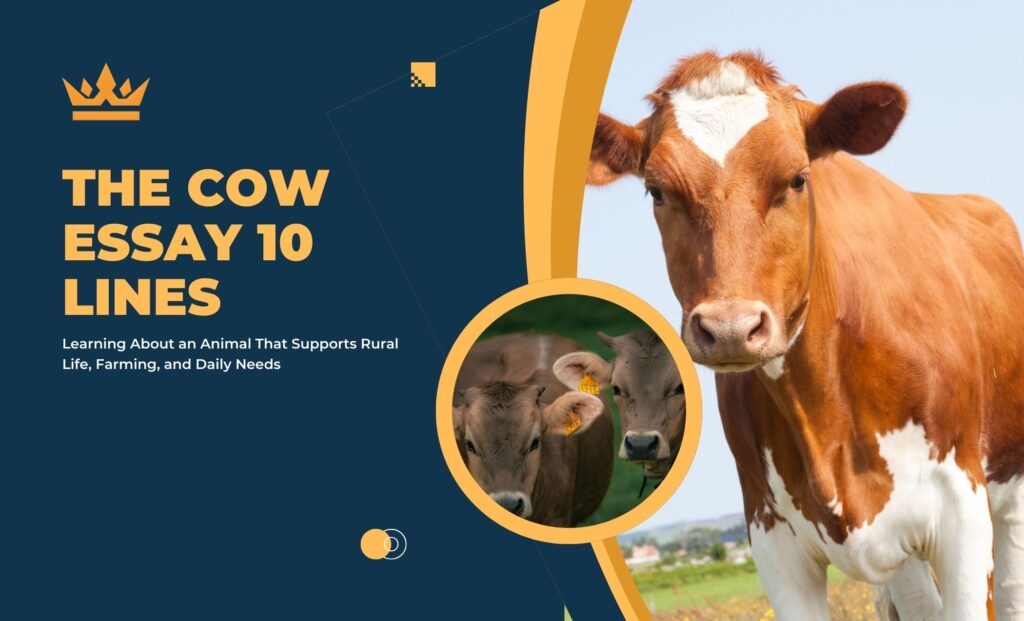
The cow is one of the most familiar animals on farms and in fields. For many people around the world, the cow is a source of food, income, culture, and comfort. The cow gives milk, helps on farms, and plays a role in many traditions. Understanding the cow means looking at simple biology, farming practice, culture, and how we treat animals with care and respect.
This article explains why cows matter. It gives clear facts about their life and body. It looks at their role in farming and the economy. It talks about cow care, conservation of breeds, nutrition from milk, and the laws and ethics that protect them. Finally, it suggests easy classroom activities so students can learn by doing.
The Cow Essay 10 Lines
- A cow is a large domestic animal raised for milk, meat, and work.
- Cows are herbivores and eat grass, hay, and other plant foods.
- Milk from cows is a key source of nutrition for many people.
- Cows help farmers plough fields and carry loads in some regions.
- Different breeds of cows suit different climates and uses.
- Cows form social bonds and show calm, social behavior.
- Caring for cows means feeding, sheltering, vaccinating, and cleaning them.
- Cow dung and urine are used as natural fertilizer and fuel in many places.
- Protecting native cow breeds helps preserve farming traditions and biodiversity.
- Treating cows with care and respect supports food security and rural livelihoods.
What is a cow? Simple facts
A cow is a domestic bovine animal. The word cow usually refers to an adult female. Male cattle are bulls. Young animals are calves. Cows belong to species such as Bos taurus or Bos indicus, depending on where they come from.
Cows are ruminants. That means they have a stomach with four parts. These parts help them break down grass and other rough plants. Tiny microbes in their rumen turn fiber into energy. Cows also chew cud. They bring partly digested food back into the mouth to chew again. This helps them get more nutrients from low quality forages.
Cows can live many years. Their life span changes with breed and care. In farms with good care many cows live over twelve years. Healthy cows need clean water, balanced food, good shelter, and regular health checks.
How cows eat and digest
Cows eat mainly grass and other plants. Farmers also give hay, silage, and small amounts of grains to meet energy needs. Proper feeding matters for milk and growth. Too much grain can cause stomach problems. Too little roughage reduces cud chewing and weakens digestion.
A simple feeding plan helps. Give plenty of clean water. Offer green fodder when available. Give dry fodder like hay in the dry season. Add a small amount of concentrate feed if needed for milk cows. Keep mineral blocks so cows get salt and tiny nutrients. Watch the cow’s body condition. Thin cows need more energy. Fat cows need less grain.
Milk, nutrition, and daily food
Milk is one of the most useful products from cows. Cow milk gives protein, fat, sugar (lactose), vitamins, and minerals like calcium. These nutrients build bones, help growth in children, and give energy to people of all ages.
Milk becomes many foods. Yogurt, butter, cheese, ghee, and paneer are common items. Each product helps people use milk in ways that last longer and fit local tastes. Using milk well helps families get good food and income from the same animal.
Many jobs depend on milk. People work in milking, cooling, transport, and selling dairy items. Small dairy farms give steady money to rural families. Milk often pays for school fees, medicine, and daily needs.
Cows in farming and work life
In farms, cows and oxen still help in some places. They pull ploughs, carry loads, and help families with transport. In small fields, animals can be cheaper and more reliable than machines.
Cow dung is useful. It works as fertilizer for crops. Farmers mix dung with straw to make compost. Dung cakes can dry and be used as fuel. Modern uses include making biogas. Biogas plants use dung to make cooking gas and fertilizer for gardens.
Cow breeds and their uses
Many breeds exist. Some breeds give a lot of milk. Holstein and Jersey are examples in many countries. Local breeds give less milk but survive on poor feeds and resist local disease.
Some breeds are for meat. These beef breeds grow quickly and give good meat. Farmers in many places keep dual purpose breeds. These animals give milk and can also work in the field or give meat later.
Local breeds are precious. They fit the land, the weather, and local disease patterns. Keeping native breeds keeps genetic diversity. This helps farmers face new challenges like heat or new illnesses.
Social and cultural place of cows
Cows hold a special place in many cultures. In some communities cows are a sign of wealth and care. Festivals often include milk food like sweet rice or ghee. Many people name their cows and treat them like family members.
In some religions cows are sacred. That belief affects how people keep and protect cows. In other places cows are part of daily life and food systems. People who work with cows often feel a deep bond with them. These bonds shape how cows are cared for and valued.
Simple steps to care for cows
Caring for cows is simple but steady work. Key steps include:
- Clean water. Give fresh water every day. Milk drops if water is scarce.
- Balanced feed. Offer green fodder, dry fodder, and a little concentrate if needed.
- Good shelter. A dry, clean shed keeps cows healthy.
- Health checks. Vaccines and parasite control prevent many diseases.
- Milking hygiene. Clean udders and clean hands make milk safe.
- Calf care. Newborn calves need warmth, colostrum, and gentle handling.
These steps help cows live longer and give better milk. Small changes like clean bedding and regular cleaning keep cows from getting sick.
Common cow diseases and prevention
Cows can get mastitis, foot and mouth disease, parasites, and infections. Mastitis is an udder infection that lowers milk and makes milk unsafe. Good milking practices help prevent it.
Vaccination and basic veterinary care stop many illnesses. Farmers should watch for signs like loss of appetite, fever, off milk, or limping. Early treatment helps recovery and saves money in the long run.
Economy and village life
Cows play a big role in village life. Milk sales give daily cash. Dung saves money on fertilizer. Small dairy units create steady income when crop money is slow. Cooperatives help farmers get better prices and market access.
Training programs, simple credit, and support for cold storage help farmers improve profits. When farmers earn more, children can go to school and families can save for the future.
Save native breeds and farming heritage
Many native breeds are in danger. Cross breeding and focus on high yield breeds reduce native numbers. Native breeds may give less milk but they survive better in local conditions. They need less feed and resist local disease.
Conservation means careful breeding, paying farmers to keep native breeds, and promoting their products. Local breeds are part of the farm culture and food security for future generations.
Intensive farming, welfare, and balance
Modern dairy often pushes high milk yield. High yield needs more feed, better housing, and careful health checks. If not managed well, intensive systems can harm cows. Problems include stress, more disease, and poor living space.
Good farming balances production and welfare. Cows need space, clean bedding, and time to graze. Humane handling, steady rest, and quiet surroundings help cows stay healthy and productive.
Beyond milk: other cow products
Cows give meat, hides, and byproducts used in industry. Hides make leather. Dung and other waste make compost and biogas. Bones and offal have uses in industry. Using all parts well adds value and reduces waste.
Laws, ethics, and public view
Many places have laws that protect cattle, manage slaughter, and set welfare rules. Laws reflect local culture and economy. Good laws protect animals and support farmers.
Ethics means more than law. It means treating cows without cruelty. Farmers, consumers, and local leaders share duty to care for animals.
Cows, climate, and sustainable farming
Cows use land and water. They do produce greenhouse gases like methane, but good farming can lower these impacts. Rotational grazing, mixed cropping, and better manure management store carbon and reduce waste.
Small farms practicing mixed farming often have lower emissions per area and better local food security. Policies and training can help farmers adopt practices that support the land and make farms more resilient.
Women and dairy
Women do much of the work in dairies. They milk, feed, and process milk at home. Women’s groups and cooperatives help sell milk and make value added products like paneer or ghee. Supporting women with training and credit boosts family income and nutrition.
Simple nutrition and recipes from milk
Milk makes healthy food. Teachers can show simple recipes like:
- Milk porridge with fruit for breakfast.
- Yogurt with honey as a snack.
- Paneer sandwiches for a quick meal.
- Small amounts of ghee for taste and energy.
Teaching safe milk storage and basic cooking helps families use milk safely.
Policy, markets, and community actions
Good policy helps small farmers. Support for vaccines, cold chains, and cooperatives helps farmers get fair prices. Local value addition keeps money in villages. Small grants for better sheds and biogas units make life better.
Community care prevents theft and violence. Clear rules and local dispute resolution protect animals and farmers. Policies must balance culture, farmers’ rights, and consumer needs.
Learning and research: where to read more
Students can learn by doing. Visit a farm, measure feed, or record a cow’s day routine. Local extension centers and veterinary guides have simple leaflets for farmers. Project work teaches science, maths, and life skills.
A closer look at digestion and health
To understand a cow better, it helps to know how it digests food. The rumen holds food and hosts microbes that break down fiber. The reticulum mixes and moves food. The omasum absorbs water and nutrients. The abomasum works like a stomach in people, using acids to finish digestion. Chewing cud aids this process. Gentle feeding and steady water keep digestion healthy.
A simple daily routine for small farms
A steady routine keeps cows calm and healthy. A small farm routine could be:
- Early morning: Let cows graze or give green fodder. Check water and clean the shed.
- Mid morning: First milking if needed. Clean udders and use clean containers.
- Noon: Rest under shade and give dry fodder if needed.
- Afternoon: Second milking for stall-fed cows. Check calves and drinking water.
- Night: Give proper feed, clean the area, and shelter cows safely.
A short village cooperative story
Ten families in a village began a small milk group. Each family brought one cow. They pooled morning milk and cooled it in a simple chiller. A shop helped sell milk and yogurt. The group used earnings to buy medicines and a scale. In two years children could afford school books and fewer families faced money trouble. Small groups like this show how teamwork helps.
Food safety and milk quality at home
Boil milk before drinking and clean all utensils. Store milk in the coolest place possible. Use clean cloths and clean hands. If electricity is not available, use clay pots or shade for cooling. Good hygiene during milking keeps people healthy and keeps milk saleable.
Protecting native breeds
Native breeds are adapted to local heat, feed, and disease patterns. They may not give the highest milk, but they survive on low feed and cost less to keep. Farmers can protect these breeds by careful breeding, giving a small payment to those who keep native cows, and by making special markets for native milk and products.
Simple economics and farm planning
A cow needs feed, shelter, and medicine. Milk brings regular money. Farmers save on fertilizer by using dung and on fuel by using dung cakes or biogas. Keeping simple records helps families see whether a cow brings profit. Cooperatives and local dairy centers help farmers sell milk and get better prices.
Teaching children about cows
Use stories and hands on practice. Invite a farmer, visit a small farm, and show how milk becomes yogurt. Let students keep a one week diary of a cow’s routine. Make posters about local breeds. Small activities teach science and care.
Myths and facts
Some people think foreign breeds are always better or that cows should always roam free. The truth is more complex. Foreign breeds can give more milk but may need better feed and housing. Free grazing is fine sometimes, but cows still need care, shelter, and health checks. Teaching simple facts helps families make better choices.
Cows and the environment
Cows are part of the farming circle. When farmers use manure well, it feeds the soil and grows healthy crops. Methods like rotating the grazing area, planting fodder trees, and mixing crops with animals can keep land healthy. Policy support for small farmers, training in better feeding, and help with simple machines make dairy farming kinder to the land and more productive.
Women, credit, and local markets
Women are often the main dairy workers. When women get training, small loans, and a place in cooperatives, families grow stronger. Local markets, simple cold storage, and fair pay help women sell more and earn more for their families. Supporting women in dairy is one of the quickest ways to improve nutrition and income in villages.
More classroom activities
More actions make lessons stick:
- Keep a diary for a cow for a week and note feed, milk, and behavior.
- Make a poster about native breeds and display it in class.
- Build a small model biogas plant using a bottle to show how dung makes gas.
- Role play a day in the life of a dairy farmer.
These activities teach science, teamwork, and responsibility.
A note on respect and kindness
Caring for cows is not only a job. It is also a space to show respect for life. Farmers and students who learn to treat animals with care often grow into adults who value life and fairness. Small acts like gentle handling, regular feeding, and quick help for sick animals build a culture of kindness.
Conclusion: small acts, big effects
The cow is a simple animal with a big role. It feeds people, supports incomes, and links culture and science. A well cared for cow brings steady food and steady money. A well run farm saves resources and protects the land.
By learning how cows live, how to feed them, and how to use milk safely, communities can improve health and income. Teaching children with simple stories and hands on activities builds a future where people and animals thrive together.
Classroom action: ask students to write a short plan on how they would care for one cow for a week. This simple task builds responsibility and ties learning to real life. Share your learning and help animals in your community.
